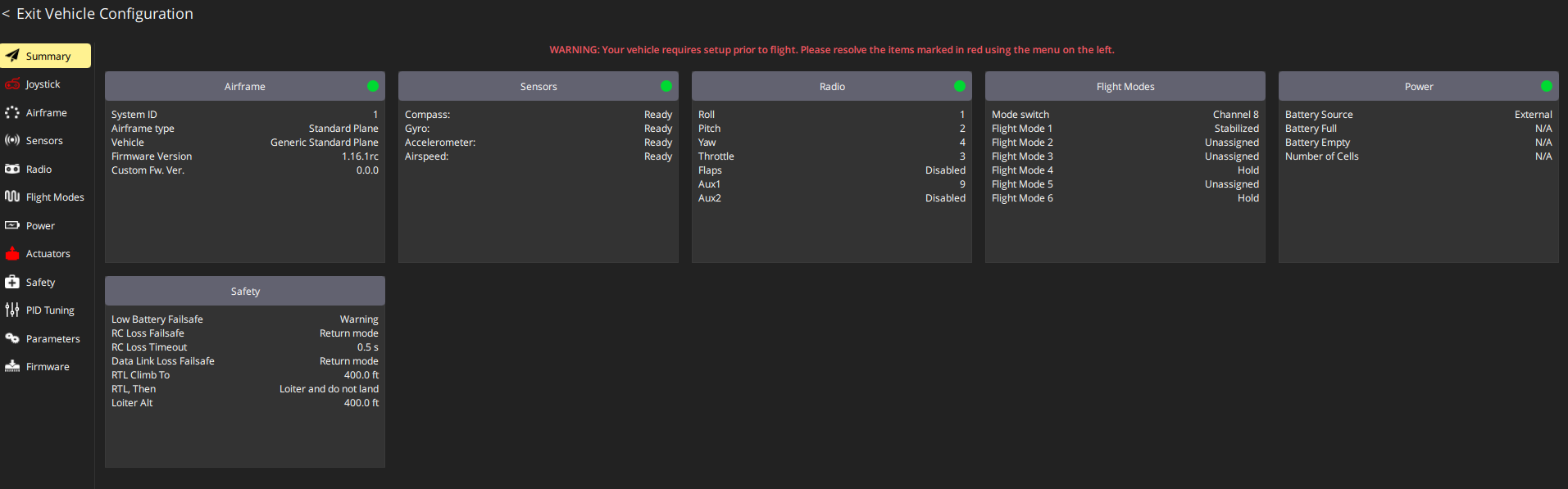
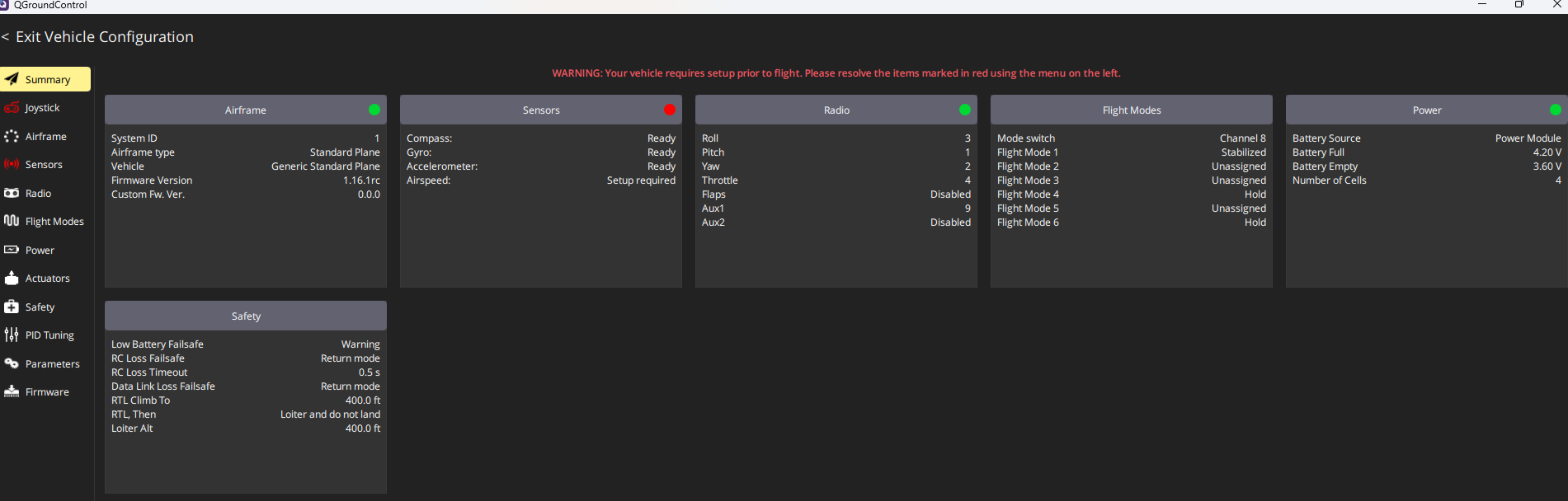
I found OTHER instructions in the forums (this forums) stating to disable all other airspeed sensors and then enable SDP33 in the Parameters→Sensors list which I did. I also rebooted.
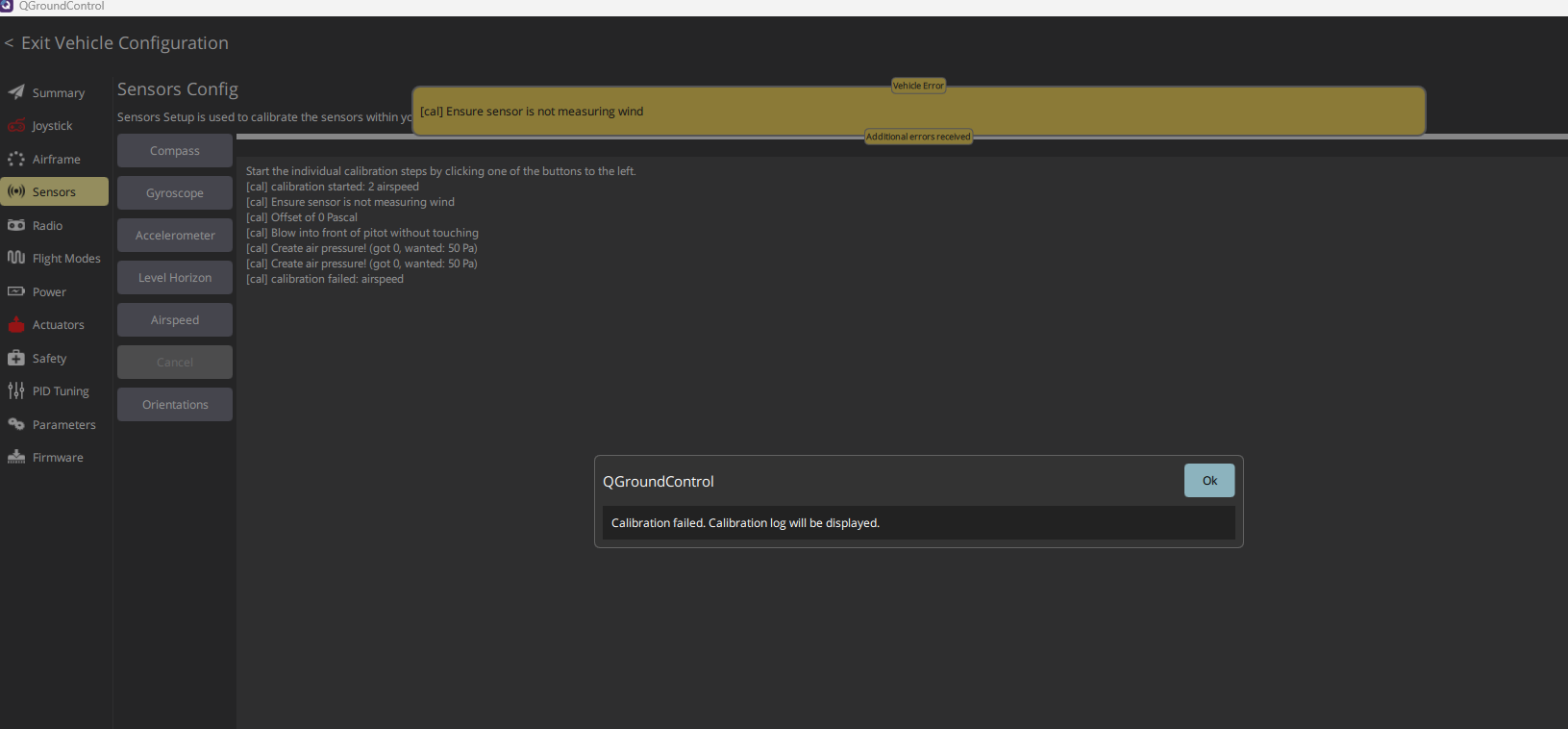
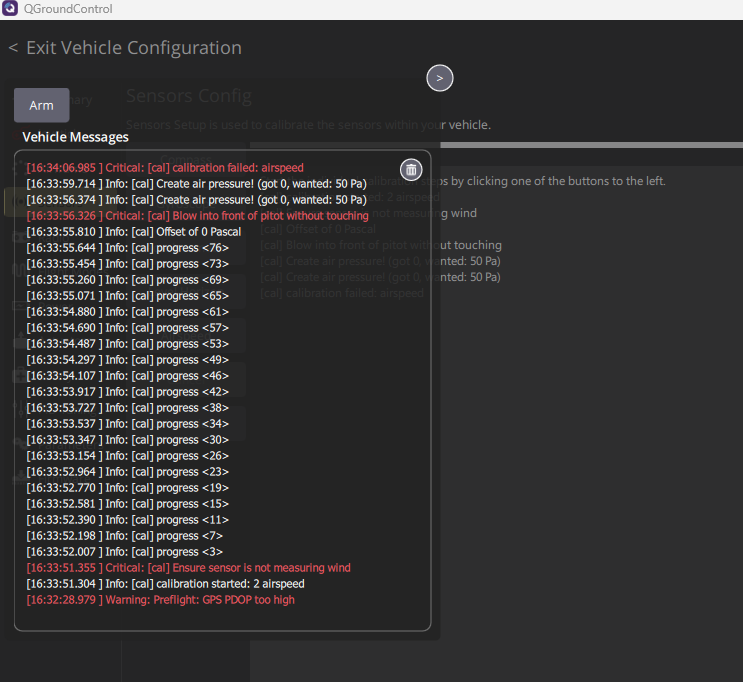
I then go to Sensors→Airspeed and click on Airspeed. I don’t touch the pitot tube until it tells me to blow into it, front only. I do this and it fails. It fails if I switch the tubing, it fails no matter what I have tried.
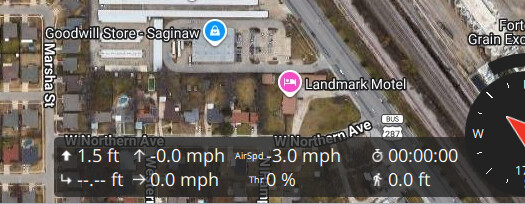
It is also reporting negative airspeed and is showing -3.0 mph instead of zero mph.
Swapping the tubing has solved the negative airspeed problem, “zero” is still showing as -3.0 mph. I do not trust the calibration procedure or the reported airspeed that shows up when I blow into the tube.
Hi there!
I assume the “zero” is also fluctuating a bit? This is expected with most sensors and will not harm your performance.
The calibration failing is strange though. You mentioned that you actually get airspeed right?
Marking this as tentatively solved. Turned out one needs to blow into the front (dynamic) end of the pitot tube HARD. You have to push enough air to hit the upper sensing limit, in the SDP3x case that’s 50 Pascals of pressure. Not sure if the calibration is correct though as its resting mph is bouncing betweent -3 and +3mph. It should be a SOLID ZERO mph bouncing NONE AT ALL. We will see.
Ah, yes, forgot to mention that. Its expected that you have to blow pretty hard
Its expected to bouce in low numbers, if you do not have an extremely expensive airspeed sensor (100s or 1000s of dollars). So all good to go.
I’ve been flying with such sensors forever, and its never really been an issue.
What I suspect is happening then is that Ardupilot includes a low-pass filter on the airspeed - which can be good, but also decrease performance, depending on the application.