

Hi all,
I’m adding thermal imaging to an indoor drone and want the cheapest option that will genuinely do the job, without overspending and without buying something too weak to be useful.
Setup
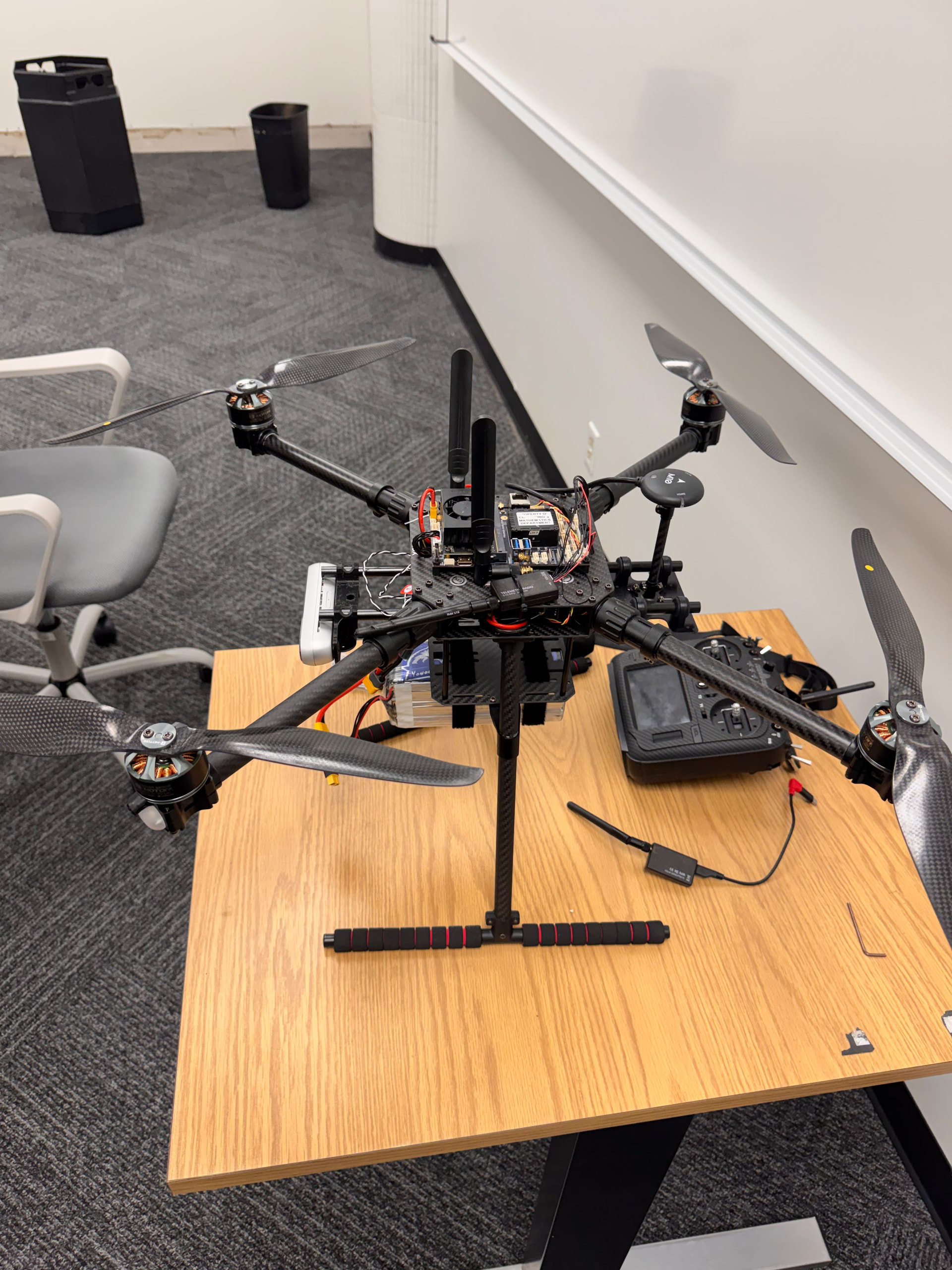
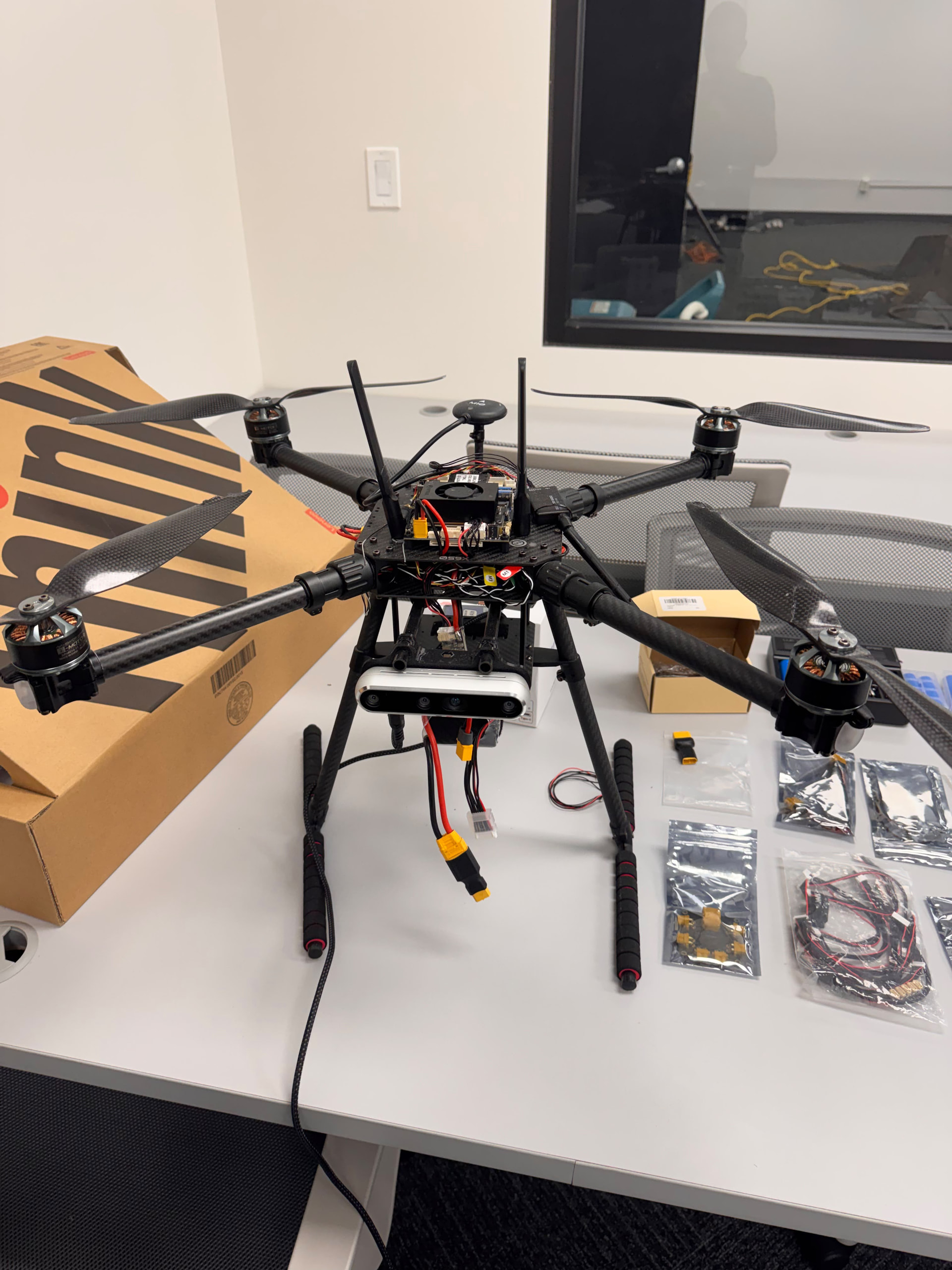
- Holybro X650, Pixhawk 6X, PX4 1.15.4
- Jetson Orin NX 16GB on the Holybro Pixhawk Jetson Baseboard, connected to PX4 over Ethernet (uXRCE-DDS)
- Intel RealSense D455 for visual SLAM (no GPS or compass). Position hold is working well indoors.
- We run our own web dashboard on the Jetson that shows and records the camera feeds.
What the thermal camera needs to do
- Let the operator clearly spot people and heat sources from about 2–5 m altitude, indoors and in the dark
- Stream to the Jetson so we can display and record it ourselves. Plug-and-play (e.g. USB) is preferred.
- Be light and low-power enough not to affect flight
- Possibly be used outdoors later, for security-style patrols
Questions
- What’s the cheapest thermal camera you’d actually recommend for this, and what’s the minimum resolution you’d consider usable from that height?
- Anything you’d avoid, i.e. cheap options that look good on paper but disappoint in the air?
- Any tips on running it alongside a RealSense on a Jetson (USB bandwidth, power, drivers)?
- For flying in the dark, would an 850 nm IR floodlight keep the D455’s IR stereo working for VSLAM, or is there a better approach?
- Any mounting or vibration-damping advice for a small camera on an X650?
Thanks, and a photo of the build is attached.
Interesting build, especially with the D455 already providing indoor position hold through the Jetson/PX4 stack.
One distinction I would make before choosing a thermal camera is whether it will be used only for operator viewing/recording, or eventually as an input to autonomous perception.
For viewing and recording, a lightweight USB/UVC thermal module with a documented Linux interface may be the simplest integration path. I would evaluate resolution together with field of view and the actual target size at 5 m, rather than resolution alone.
For the D455 in darkness, I would validate the 850 nm illumination experimentally rather than assume it will preserve VSLAM performance. Active IR may help stereo depth under some conditions, but exposure, reflections, surface texture and projector interference can change the result.
Since your position hold already works, I would preserve that baseline and run a small controlled test matrix:
-
D455 only, normal lighting.
-
D455 only, darkness.
-
D455 with external 850 nm illumination.
-
D455 plus thermal streaming and recording under full Jetson load.
For each run, compare tracking continuity, estimator innovations, CPU/GPU load, USB errors, dropped frames, camera timestamps and PX4 position-hold behaviour.
That would establish whether the new camera and illumination affect the navigation system before changing any estimator or controller settings.
One question: are you targeting thermal imaging only for the operator dashboard, or do you intend to use it for autonomous detection/tracking later?